Commercial Floor Scrubbers: The Complete Buyer’s Guide for Cleaner, Safer Floors
If your team is still cleaning commercial floors with a mop and bucket, let’s call it what it is: expensive, inconsistent, and painfully slow. A mop might be fine for a small spill near the breakroom. It is not a real floor-care strategy for a warehouse, school, retail store, church, gym, production facility, showroom, or property maintenance operation.
A commercial floor scrubber changes the math. Instead of spreading dirty water around and hoping the floor dries before someone slips, a floor scrubber applies cleaning solution, agitates the surface with a brush or pad, and vacuums the dirty water back into a recovery tank. Done correctly, the floor is cleaner, drier, safer, and more consistent.
The catch is simple: buying the wrong scrubber can cost you just as much as not buying one at all.
Go too small and your crew wastes labor every day. Go too big and you overpay for a machine that cannot maneuver through your building. Ignore floor type, battery life, tank capacity, service access, pads, chemicals, or operator skill, and you end up with an expensive piece of equipment that sits in a storage room like a guilty secret.
This guide breaks down how floor scrubbers work, which type fits your facility, what features actually matter, and how to choose the right machine before you spend real money.
What Is a Commercial Floor Scrubber?
A commercial floor scrubber is a floor cleaning machine designed to wash and recover dirty solution from hard floors in one pass. Most machines use a solution tank, scrub deck, brush or pad driver, squeegee assembly, vacuum motor, and recovery tank.
Here is the basic process:
- Clean water and floor cleaning solution are dispensed onto the floor.
- A brush or pad agitates dirt, grease, dust, tire marks, and residue.
- A rear squeegee gathers the dirty solution.
- A vacuum system pulls the wastewater into a recovery tank.
- The operator continues cleaning without leaving standing water behind.
That last part matters. Wet floors are a safety problem, especially in commercial spaces with customers, employees, tenants, students, patients, forklift traffic, or volunteers moving through the building.
Why Floor Scrubbers Beat Mopping
Mopping looks cheaper until you calculate labor, repeat cleaning, drying time, inconsistent results, and slip risk. A mop gets dirty fast. Once the mop water is contaminated, the operator is often spreading soil from one section of the building to another. That is not cleaning. That is relocating the mess.
A floor scrubber gives you:
- Faster cleaning over large areas
- Better soil removal through mechanical agitation
- Less standing water
- More consistent cleaning results
- Reduced operator fatigue
- Better appearance for customers and staff
- Lower labor cost over time
- Cleaner grout lines, concrete, epoxy, tile, and other hard surfaces
If your facility has a few hundred square feet of hard floor, a mop may still make sense. If you are maintaining thousands of square feet, mopping is usually a false economy. It feels cheap because the invoice is small. The labor cost is where it punches you in the ribs.
Walk-Behind vs. Ride-On Floor Scrubbers
The first major decision is whether you need a walk-behind floor scrubber or a ride-on floor scrubber.
Walk-Behind Floor Scrubbers
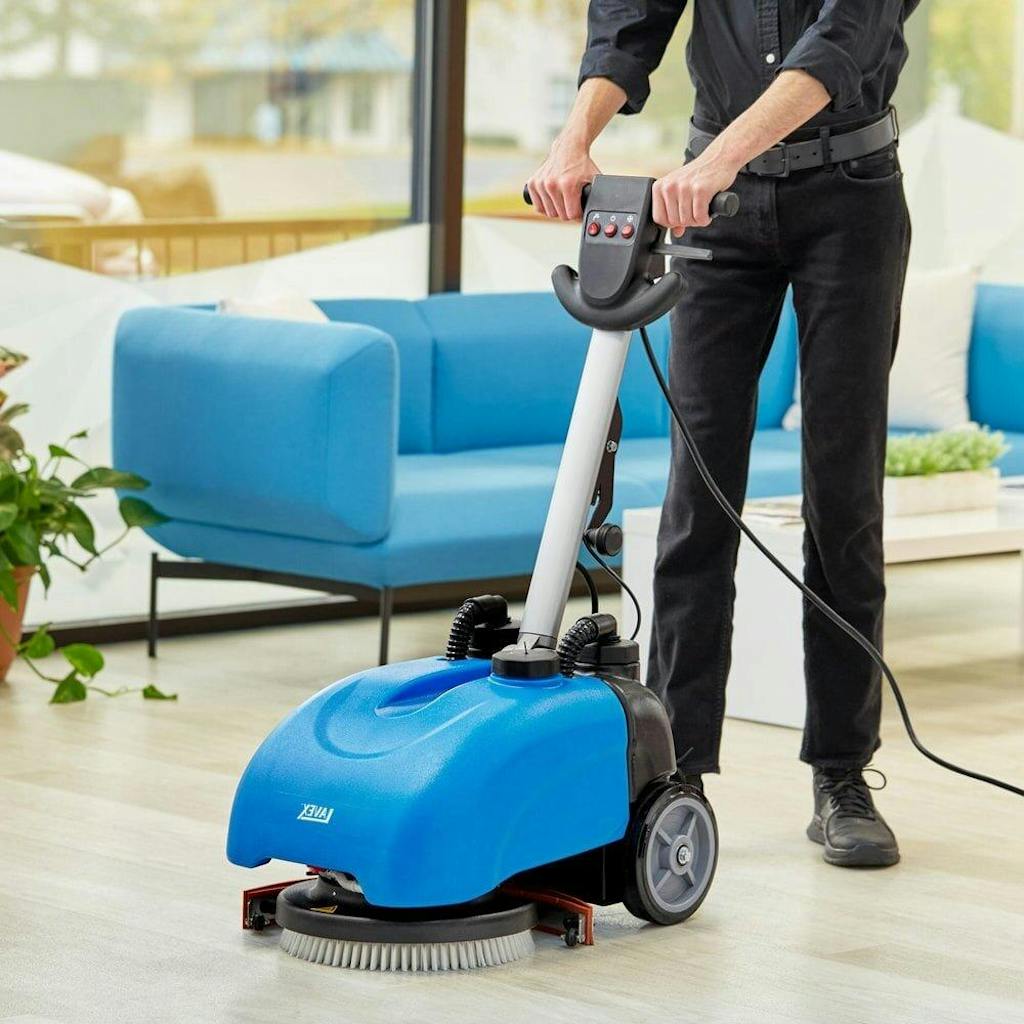
A walk-behind scrubber is operated from behind the machine. The operator walks with it through aisles, hallways, classrooms, retail areas, kitchens, gyms, churches, shops, and smaller commercial spaces.
Walk-behind scrubbers are usually best for:
- Retail stores
- Schools
- Churches
- Gyms and fitness centers
- Medical offices
- Restaurants and food service areas
- Property maintenance crews
- Small warehouses
- Buildings with narrow halls, doorways, or tight turns
The biggest advantages are control, maneuverability, lower upfront cost, and easier storage. If your facility has tight spaces, obstacles, multiple rooms, or mixed layouts, a walk-behind machine is often the smarter buy.
Do not make the rookie mistake of buying a ride-on machine just because it looks more serious. If it cannot fit where you need to clean, it is not a productivity upgrade. It is a very expensive parking problem.
Ride-On Floor Scrubbers
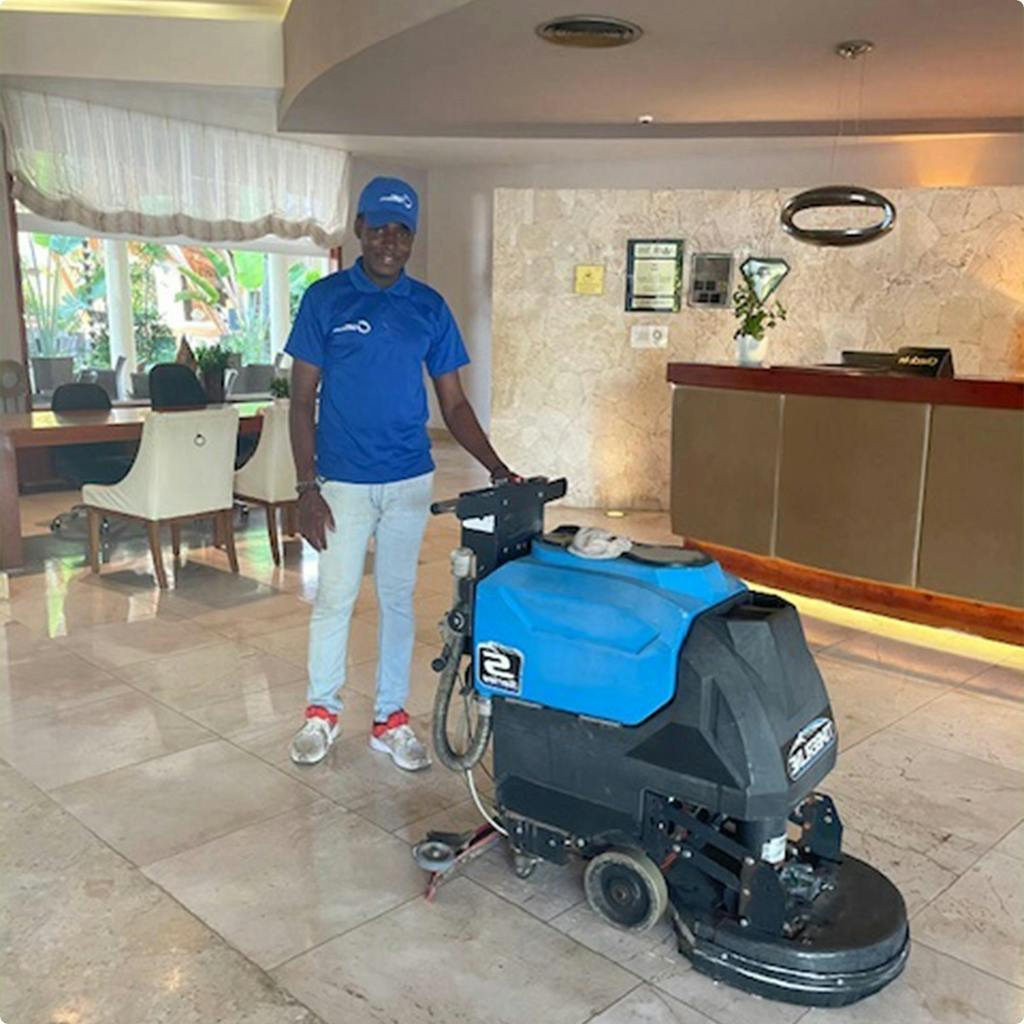
A ride-on scrubber allows the operator to sit or stand on the machine while cleaning. These machines are designed for larger spaces where productivity matters more than tight maneuvering.
Ride-on scrubbers are usually best for:
- Warehouses
- Distribution centers
- Manufacturing facilities
- Big-box retail stores
- Airports
- Large schools and campuses
- Hospitals
- Convention centers
- Large churches or event spaces
The main advantage is speed. A ride-on floor scrubber covers more ground with less operator fatigue. In a large open facility, that can reduce labor hours significantly.
The tradeoff is cost, storage space, turning radius, training, and maintenance. A ride-on machine makes sense when your square footage, cleaning frequency, and labor savings justify the investment.
What Size Floor Scrubber Do You Need?
Scrubber size should be based on cleanable square footage, not total building size. A 100,000-square-foot facility may only have 55,000 square feet of scrubber-friendly floor once offices, racking, restrooms, carpeted areas, machinery, and blocked zones are removed.
Use this as a practical starting point:
| Under 5,000 sq ft |
Compact walk-behind or micro scrubber |
| 5,000-15,000 sq ft |
Standard walk-behind scrubber |
| 15,000-50,000 sq ft |
Larger walk-behind or compact ride-on |
| 50,000-150,000 sq ft |
Ride-on scrubber |
| 150,000+ sq ft |
Large ride-on or fleet combination |
The key phrase is “starting point.” Layout changes the recommendation. A 25,000-square-foot facility with tight hallways may still need a walk-behind machine. A 25,000-square-foot open warehouse may justify a compact ride-on.
Match the Scrubber to Your Floor Type
Your floor surface should influence the machine, pad, brush, chemical, and water settings.
Concrete Floors
Concrete is common in warehouses, shops, garages, industrial buildings, and distribution centers. These floors often deal with dust, tire marks, oil, grease, and forklift traffic.
For concrete, look for:
- Strong pad or brush pressure
- Durable construction
- Adequate tank capacity
- Good traction
- Chemicals designed for industrial soil
- Pads or brushes matched to the soil load
If the floor has heavy dust and debris, sweeping before scrubbing is important. A scrubber is not a bulldozer. Feed it chunks of debris all day and it will punish you through clogs, streaks, and maintenance headaches.
Epoxy Floors
Epoxy floors are attractive and durable, but they need controlled cleaning. Too much chemical, the wrong pad, or aggressive scrubbing can dull the finish or create visible wear.
For epoxy, look for:
- Controlled solution flow
- Non-abrasive pads when appropriate
- Neutral or manufacturer-approved cleaners
- Proper squeegee setup
- Good recovery to prevent residue
Tile and Grout
Tile floors need agitation, but grout lines can hold soil. The right brush or pad matters. Smooth tile may clean well with pads, while uneven surfaces may need brushes that reach into texture and grout.
For tile, look for:
- Adjustable pad pressure
- Brush options for uneven surfaces
- Good water recovery
- Chemicals that remove residue without damaging the surface
Rubber Floors
Rubber flooring is common in gyms, fitness centers, schools, and recreational spaces. It can be sensitive to harsh chemicals and aggressive pads.
For rubber, look for:
- Floor-safe chemicals
- Soft or medium pads
- Controlled water use
- Machine weight appropriate for the surface
When in doubt, check the flooring manufacturer’s cleaning recommendations before choosing chemicals or pads.
Key Features That Actually Matter
A spec sheet can make every machine look impressive. Most buyers do not need more specs. They need to know which specs matter.
Cleaning Path
The cleaning path is the width of the area the machine scrubs in one pass. Wider paths clean faster in open spaces but can be harder to maneuver in tight layouts.
Do not buy the widest deck you can afford unless your building can actually use it.
Tank Capacity
Solution and recovery tank size determine how long the operator can clean before stopping to refill or empty the machine. Larger tanks increase productivity, but they also increase machine size and weight.
Battery Runtime
Battery runtime matters if you clean large areas or multiple sites. Consider how long the machine runs under real load, how long it takes to recharge, and whether your team can complete a cleaning route without stopping.
Pad Pressure
Pad pressure affects cleaning performance. Heavy soil may need more pressure, while delicate floors need less. Adjustable pressure gives you more flexibility across different surfaces.
Squeegee and Vacuum Recovery
A scrubber that leaves streaks or water trails is a problem. Squeegee design, blade condition, vacuum strength, and proper adjustment all affect how dry the floor is after cleaning.
Ease of Maintenance
Your team needs to empty tanks, clean filters, replace pads, inspect squeegees, charge batteries, and keep the machine ready. If basic maintenance is difficult, it will not happen consistently.
Look for easy access to:
- Recovery tank
- Solution tank
- Drain hoses
- Pad driver or brush
- Squeegee blades
- Filters
- Batteries
How Much Does a Commercial Floor Scrubber Cost?
Commercial floor scrubber pricing varies by size, battery type, brand, tank capacity, build quality, and whether the machine is new, used, or refurbished.
Typical ranges:
- Compact walk-behind scrubbers: $1,500-$5,000
- Standard walk-behind scrubbers: $4,000-$10,000
- Large walk-behind scrubbers: $8,000-$15,000
- Ride-on scrubbers: $12,000-$35,000+
- Large industrial ride-on scrubbers: $25,000-$60,000+
The cheapest machine is not always the lowest-cost machine. If it breaks down, lacks parts support, has weak recovery, or takes too long to clean your space, the “deal” turns into a slow-motion wallet fire.
Look at total cost:
- Purchase price
- Labor savings
- Battery replacement
- Pads and brushes
- Chemicals
- Squeegee blades
- Service access
- Downtime risk
- Freight and delivery
- Training
Common Buying Mistakes
Mistake 1: Buying Based on Price Alone
Price matters. Of course it does. But buying the cheapest scrubber without matching it to the job is how facilities end up with weak machines, frustrated operators, and floors that still look bad.
Mistake 2: Ignoring the Building Layout
Square footage is only one part of the decision. Door widths, elevators, storage rooms, aisles, ramps, turns, furniture, shelving, and obstacles all matter.
Mistake 3: Choosing Too Small
A machine that is too small may technically clean the floor, but it will cost you labor every single shift. If your operator spends hours refilling, dumping, and overlapping passes, the machine is undersized.
Mistake 4: Choosing Too Big
Bigger is not automatically better. If the scrubber cannot turn, fit through doors, or reach problem areas, your team will still need to mop or use a smaller machine around the edges.
Mistake 5: Forgetting Pads and Chemicals
The machine is only part of the system. Pads, brushes, chemicals, and operator technique determine the final result. A good scrubber with the wrong pad can still disappoint you.
Mistake 6: Not Thinking About Support
Floor scrubbers are working equipment. They need parts, consumables, maintenance, and sometimes troubleshooting. Buying from a supplier that disappears after the sale is a bad bet.
Best Floor Scrubber by Facility Type
Warehouses and Distribution Centers
Warehouses need productivity, durability, and strong soil removal. Tire marks, dust, pallet debris, forklift paths, and oil spots are common.
Best fit:
- Large walk-behind for smaller warehouses
- Ride-on scrubber for open warehouse floors
- Industrial pads or brushes
- Degreaser or concrete-safe cleaning solution when needed
Schools and Churches
Schools and churches often have mixed layouts: hallways, classrooms, cafeterias, gyms, fellowship halls, restrooms, and entrances.
Best fit:
- Walk-behind scrubber for control
- Compact ride-on only for large open areas
- Floor-safe pads for finished surfaces
- Easy operation for rotating staff or volunteers
Retail Stores
Retail spaces need appearance, dry floors, and easy maneuvering around displays.
Best fit:
- Compact or standard walk-behind scrubber
- Quiet operation when cleaning during business hours
- Strong water recovery to reduce slip risk
- Pads matched to tile, polished concrete, or vinyl
Gyms and Fitness Centers
Gyms often have rubber flooring, tile, locker rooms, and sweat residue. Chemical choice matters here.
Best fit:
- Walk-behind scrubber
- Rubber-safe cleaners
- Soft or medium pads
- Strong recovery for safety
Manufacturing and Industrial Facilities
Industrial floors may have heavier soil, grease, dust, and equipment traffic.
Best fit:
- Heavy-duty walk-behind or ride-on scrubber
- Strong pad pressure
- Durable tanks and frame
- Proper chemical system for oil and grease
New vs. Used Floor Scrubbers
Used machines can make sense, but only if you know what you are buying. A cheap used scrubber with tired batteries, worn squeegees, weak vacuum recovery, damaged tanks, and no parts support is not a bargain.
Before buying used, check:
- Battery age and condition
- Charger condition
- Recovery performance
- Squeegee assembly
- Brush deck
- Hours of use
- Leaks
- Parts availability
- Warranty or return policy
- Freight damage risk
New machines cost more upfront, but they usually offer better warranty coverage, cleaner documentation, and fewer surprises.
Floor Scrubber Maintenance Basics
Even the right scrubber will perform poorly if your team abuses it. Maintenance does not need to be complicated, but it does need to be consistent.
After each use:
- Empty and rinse the recovery tank
- Drain leftover solution if required
- Clean the squeegee blades
- Remove debris from the scrub deck
- Check pads or brushes
- Inspect hoses and filters
- Charge batteries properly
- Leave tanks open to dry when appropriate
Weekly:
- Inspect squeegee wear
- Check battery water levels if using flooded lead-acid batteries
- Clean filters
- Look for leaks
- Inspect wheels and casters
- Review operator issues
Small problems become expensive when ignored. A worn squeegee blade can make a good machine look broken.
How to Choose the Right Floor Scrubber
Use this checklist before buying:
- Measure the actual cleanable square footage.
- Identify your floor types.
- List soil problems: dust, grease, tire marks, spills, salt, food residue, or general grime.
- Map tight spaces, doorways, aisles, ramps, and storage limits.
- Decide how often the floor will be cleaned.
- Estimate available operator time.
- Choose walk-behind or ride-on based on layout and productivity.
- Match pad or brush type to the surface.
- Confirm battery runtime and charging needs.
- Confirm freight, support, consumables, and warranty.
If you cannot answer those questions, you are not ready to buy yet. That is not a criticism. It is the difference between buying equipment and gambling with a purchase order.
Frequently Asked Questions
Is a floor scrubber better than a mop?
For commercial spaces with significant hard flooring, yes. A floor scrubber cleans faster, agitates soil more effectively, recovers dirty water, and leaves floors more consistent than mopping.
What is the best floor scrubber for a warehouse?
For small warehouses, a large walk-behind scrubber may be enough. For larger open warehouses, a ride-on scrubber usually provides better productivity and lower labor cost over time.
Can a floor scrubber clean oil and grease?
Yes, when paired with the right cleaning chemical, pad or brush, dwell time, and recovery process. Heavy oil and grease may require pretreatment.
Can floor scrubbers be used on epoxy floors?
Yes, but use appropriate pads, controlled solution flow, and floor-safe chemicals. Avoid aggressive pads or harsh chemicals unless the floor manufacturer allows them.
How long do floor scrubber batteries last?
Battery life depends on battery type, charge habits, usage frequency, and maintenance. Daily-use machines need proper charging routines and periodic battery inspection.
Should I buy a walk-behind or ride-on scrubber?
Choose a walk-behind scrubber for tight layouts, smaller spaces, and mixed-use buildings. Choose a ride-on scrubber for large open areas where labor savings justify the higher cost.
The Bottom Line
A commercial floor scrubber is not just a cleaning machine. It is a labor tool, safety tool, appearance tool, and productivity decision rolled into one.
The right machine can cut cleaning time, improve floor appearance, reduce operator fatigue, and help your facility look like someone competent is in charge. The wrong machine can waste thousands of dollars and still leave your team dragging a mop behind it.
If you are not sure which scrubber fits your facility, do not guess. Clean Forge Systems helps commercial buyers match the right machine to their square footage, floor type, workload, and budget.
Need help choosing the right floor scrubber? Request a quote from Clean Forge Systems and get a recommendation based on your actual facility, not a random product page.
Recommended Internal Links
- Buying guide: /pages/how-to-choose-a-floor-scrubber
- Compare machines: /pages/compare-machines
- Request a quote: /pages/contact
- Walk-behind floor scrubbers: /collections/walk-behind-floor-scrubber
- Ride-on floor scrubbers: /collections/ride-on-floor-scrubbers
- Warehouse cleaning equipment: /pages/warehouse-cleaning-equipment
- Cleaning chemicals: /collections/cleaning-chemicals
- ORBOT floor machines: /collections/orbot-floor-machines
Suggested Image Alt Text
- Commercial floor scrubber cleaning a warehouse concrete floor
- Walk-behind floor scrubber used in a school hallway
- Ride-on floor scrubber cleaning a large industrial facility
- Floor scrubber pads and cleaning chemicals for commercial floors
- Clean Forge Systems commercial floor cleaning equipment
Schema Markup Ideas
- Article schema
- FAQPage schema using the FAQ section above
- Product or CollectionPage schema on linked category pages
- BreadcrumbList schema